
Jerome County Release Feed Status
The official Jail Reports & Warrants page identifies Active Warrants, In Custody Head Count, Arrests, Arraignments, and VINE. None is a Jerome County 72-hour release feed. The headcount covers people currently incarcerated. Arrests show bookings, not exits. Arraignments show initial court appearances, and warrants answer another question entirely.
The linked SIRCOMM public portal is useful for checking the current report. As observed July 16, 2026, its configured products did not include a released-person report. The interface can change, but a report should not be relabeled or reconstructed from differences between lists. Transfers, corrections, spelling changes, and update lag can all remove or obscure a name.
The county's report page is shown below because it documents the available report types, not because it supplies a release list.
View the Jerome County jail-report source before interpreting a portal result.
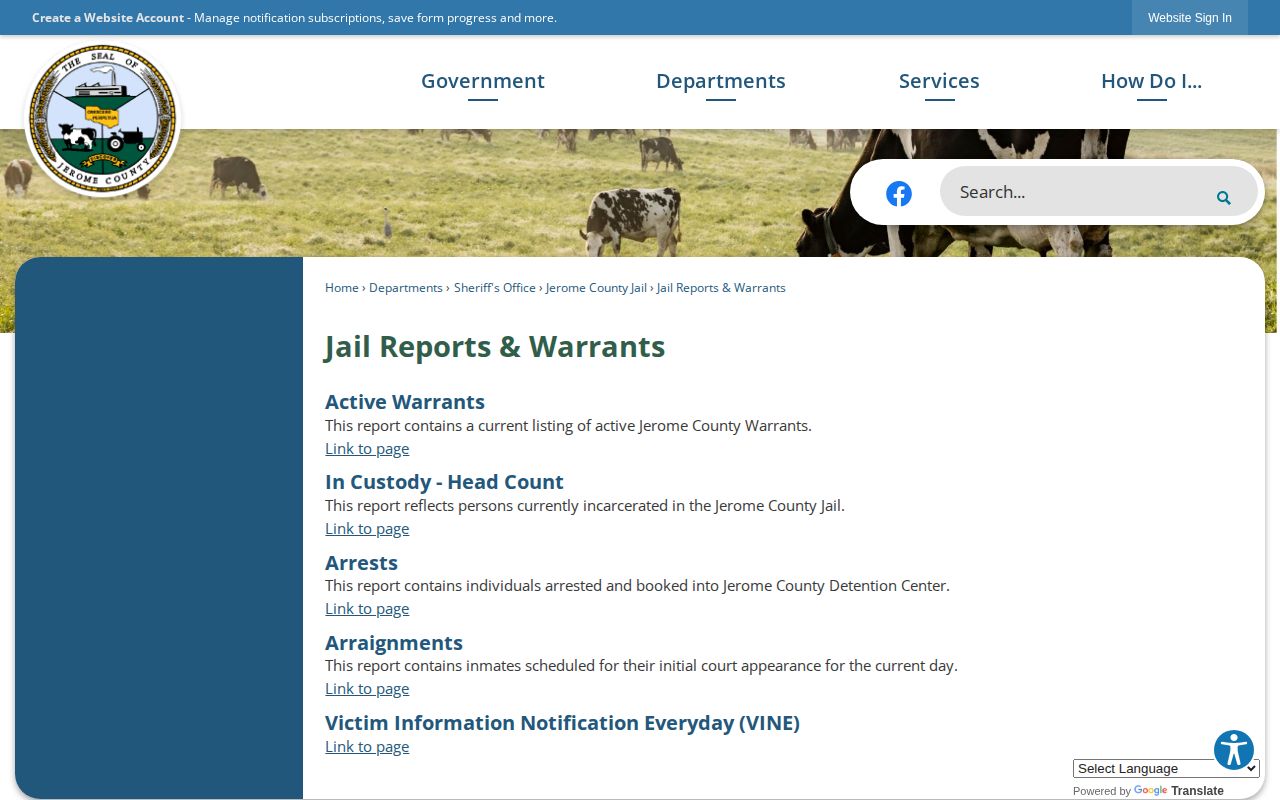
The official labels make the boundary clear: current custody and recent arrest reports do not form a three-day release archive.
Trace Jerome County Three-Day Releases
A 72-hour inquiry benefits from a dated custody timeline. Keep the full name, date of birth or year, case number, and booking number when available. Note when each source was checked. Over three days, a person can move through booking, arraignment, release, and another custodian, so an undated screenshot can hide the sequence.
- Open the county report page and follow In Custody Head Count. A match supports current Jerome County Jail custody at the report's update time.
- Search Idaho VINELink for the same person. Read whether the event says release, transfer, or another custody change.
- Use Idaho iCourt Smart Search with the case number or the format
Last, First. Review the latest bond, dismissal, time-served, commitment, or release order. - Call Jerome County Jail at 208-595-3360 for a focused present-custody question and direction to records.
- Submit a written request for the actual release date, time, disposition, and receiving agency when exact proof is needed.
The court can explain the authority for an exit, but it may not show the moment the person physically left. VINE registration works best before an event and should not be treated as a three-day archive. The sheriff's release entry closes that gap. For a broader named-person search across systems, use the Jerome County released-inmate search path.
Use the three-day span to reconcile events in order. An arrest report may place the booking near the start of the interval. A daily arraignment can point to the first court appearance. In iCourt, Bond Information, Disposition Events, the register of actions, judgments, minutes, and orders may explain what happened next. Search a person as Last, First or use the full case number. A public no-result can reflect spelling, sealing, or Clean Slate shielding, so it does not prove that no case or release exists.
VINE can corroborate a reported event during the interval, especially when registration occurred before it. Read release, transfer, and escape as separate labels. A transfer alert explains why the county record disappeared while custody continued. If the event is no longer visible, a saved alert may help identify the date, but the sheriff's retained entry remains the archival source for exact release time, disposition, and destination.
Jerome County Release Record Fields
Because no public Jerome County 72-hour list exists, there is no official online field set to promise. The county retention schedule does describe booking records and permanent inmate case files. A narrow request can seek the fields that answer a three-day release question without asking for an undefined file.
| Requested field | What it can establish |
|---|---|
| Name and booking number | Links the exit entry to the correct jail booking. |
| Confinement date | Identifies the start of the custody episode. |
| Release date and time | Records when Jerome County Jail custody ended. |
| Release disposition | May state the agency's recorded reason or type. |
| Receiving agency | Distinguishes community release from transfer. |
| Release order or receipt | May document authority, exit processing, and property return. |
Request only labels the agency actually keeps. A receiving-agency entry is especially important. Leaving Jerome County Jail for IDOC, another jail, or ICE ends county custody but does not mean the person entered the community.
Define the Jerome Release Window
The Sheriff's public-record request form is the durable path after the live report changes. State the exact beginning and end of the 72-hour window, including the time zone. Ask for the booking sheet, confinement and release date and time, recorded release disposition, receiving agency, and release order or receipt. Include a name, birth date if known, case number, and booking number.
The form supports delivery choices and a record description. Ask for electronic delivery when practical. Protected details may be redacted, and the custodian may ask for clarification or apply an authorized cost. A specific request is easier to process than asking for every file connected to a person.
Review the Jerome County request form before describing the interval and fields.
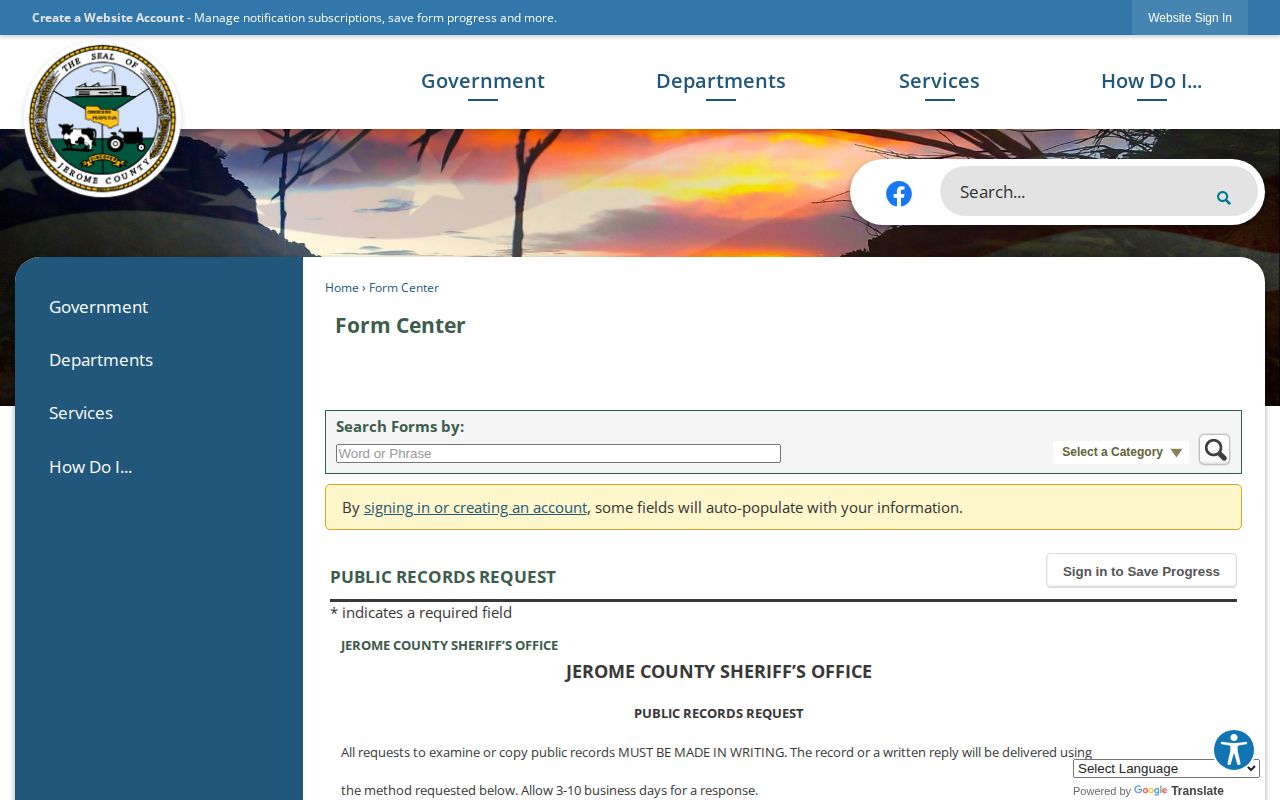
The written form preserves a route to the retained record even after the public headcount no longer shows the person.
An aggregate request needs careful wording because no source guarantees a ready-made three-day list. Ask for a release log, if maintained, containing releasable names, booking identifiers, release dates and times, and recorded dispositions within the stated interval. The agency may instead locate responsive booking or case-file entries, redact protected material, seek clarification, or assess an authorized cost. Do not imply that the sheriff must create a new report by subtracting one roster from another.
The county retention schedule gives older records more value in this window. Inmate case files are marked permanent and may include entry and release dates, release orders, and a receipt showing property return. Accountability logs or rosters follow a different retention period, while booking-record retention varies by category. Those agency schedules do not describe how long a name stays on a public webpage.
Jerome County Release or Transfer
“Released” should name the custody that ended. A person still on the Jerome County headcount remains reported in county jail custody. A person removed from that report may have entered the community, moved to IDOC, gone to another county, or transferred to federal or immigration custody. Database lag and identity mismatch remain possible too.
| Result | Careful reading | Next source |
|---|---|---|
| On Jerome headcount | Currently reported at the county jail | Jail or VINE |
| VINE release event | Feeding agency reported release | Sheriff release entry |
| VINE transfer event | Custody moved, not community freedom | Receiving system |
| IDOC “In custody” | State custody continues | IDOC detail |
| IDOC “Discharged” | IDOC jurisdiction ended on its date | IDOC or court record |
Federal cases belong in the BOP locator after designation, while ICE's locator covers qualifying current immigration custody. Neither tool is a substitute for the Jerome County release entry. Note: A transfer date ends one custodian's hold, but it is not a community release date.
Jerome County's Missing Release Archive
Jerome County's report menu has a distinctive “negative architecture.” It separates current headcount, arrests, three-day arraignments, and warrants, yet it offers no released-person view. Once a person leaves the headcount, the public interface stops answering the key question. The missing name is therefore the start of a check, not its conclusion.
The archive sits behind the public display. The county retention schedule describes permanent inmate case files that may hold entry and release dates, court commitment and release orders, and a release receipt showing property return. Inmate accountability logs have a different schedule, and booking-record retention can depend on the offense category. Web visibility and agency retention are not the same.
This local design explains why screenshots of yesterday's and today's lists should not be subtracted to manufacture a release feed. A difference could reflect transfer, correction, or refresh behavior. For a tighter window, the Jerome County 24-Hour Releases page focuses on the newest day and rapid event checks.
State, federal, and immigration paths can also unfold within 72 hours. An IDOC result marked “In custody” supports continued state custody after a county transfer. BOP's locator applies only to federal custody in its scope, and ICE ODLS is a current-custody locator rather than a release archive. The U.S. Marshals Service has no public individual locator. Start with the recorded receiving agency instead of searching every system at random.
When all online tools return no match, rebuild the custody chain from the arresting agency and case. Request the county booking and release or transfer entry, obtain the relevant court order, and then query the supposed receiver. This approach accounts for sealed cases, spelling changes, stale interfaces, and systems that retain only limited data after discharge. Silence from several databases is still not a release certificate.